If you’ve ever walked into a manufacturing workshop – automotive assembly line, aerospace fabrication, even high-volume consumer electronics production – chances are you’ve heard the faint, sharp snap of a rivet being set. That sound isn’t just routine; it’s the backbone of permanent, high-strength joints that hold millions of products together every day. As a riveting equipment supplier who’s been navigating this industry for 18 years, I get asked one question more than any other: “What is the actual cost of riveting equipment?” It’s not a one-size-fits-all number, and I’ve seen too many shops make costly mistakes by treating it like a generic office supply purchase. Let’s break down the real, layered costs – not just the sticker price, but the hidden expenses that add up over the machine’s lifespan. Riveting Equipment
First, let’s set a baseline. Most small to medium enterprises (SMEs) looking to add riveting capacity immediately glance at entry-level manual rivet tools. These are hand-operated, no power required, and they’re the cheapest on the market. I’ve seen models priced from $120 to $800, depending on brand, weight, and maximum rivet diameter they can handle. But here’s the catch: manual tools require consistent physical effort from operators. If you’re running a 100-piece batch, an operator might go through 500 rivets in a shift – that’s 500 hand squeezes, often leading to carpal tunnel syndrome, reduced precision (slipped rivets are common with fatigued hands), and lower overall output. For a shop gearing up for steady production, that $800 manual tool can end up costing 10x more in labor costs, rework, and employee turnover within two years. That’s why most mid-tier operations shift to pneumatic riveting equipment, which runs on compressed air systems.
Pneumatic riveters are the workhorses of the industry. Their prices range from $800 for a light-duty portable model up to $5,000 for a heavy-duty, fixed-mount unit rated for 1/2-inch steel rivets. But the baseline cost here isn’t just the machine itself. You also have to factor in the existing compressed air infrastructure in your shop. If your workshop doesn’t have a dedicated 5- to 7-horsepower air compressor, or if your air lines are too narrow (leading to pressure drops that reduce rivet strength), you’ll need to add that. A 60-gallon air compressor for small to medium operations runs $1,200 to $2,500, and routing properly sized lines and regulators adds another $500 to $1,500 depending on your shop’s layout. I recently worked with a metal fabrication shop in Detroit that tried to skip the new compressor and use a existing 3-horsepower unit; they ended up with 15% of their rivets failing inspection, costing them $1,800 in rework before they upgraded. That’s a classic hidden cost that no one tells you about when you first look at equipment prices.
Then there’s electric riveting equipment, which has grown massively in popularity over the last decade, especially with the rise of electric vehicles (EVs) and aerospace components that need precise, repeatable joint strength. Electric models eliminate the need for compressed air, so they don’t have ongoing air supply costs, and they offer far more control over rivet force and displacement – critical for applications like EV battery modules, where inconsistent joint pressure can lead to fire risks or component failure. Prices for electric riveters start at around $1,500 for tabletop units designed for light manufacturing, and go up to $25,000 for automated robotic riveting cells used in high-volume aerospace production. Wait, $25,000 for a robot? Let’s be clear: that’s a fully integrated cell, not just a robot arm. It includes the rivet feeder, the tool head calibration system, and the safety guarding required for industrial environments. For an SME doing 50,000 to 100,000 rivets a year, a mid-tier electric riveter – around $5,000 to $8,000 – is usually the sweet spot. But again, there are ancillary costs here. You’ll need to account for power supply (most electric models run on 110V for light use, 220V for heavy), regular tool maintenance (replacing rivet dies, which cost $20 to $100 each, depending on size), and training for operators who aren’t used to digital controls. I once had a customer in the appliance industry who bought a top-of-the-line electric riveter for $7,500 and didn’t budget for die changes; after 10,000 rivets, he spent $1,200 on replacement dies and didn’t factor that into his initial cost projection.
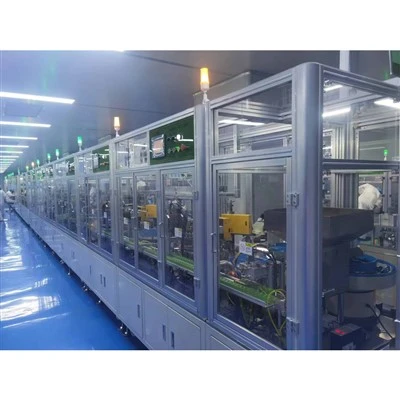
Now, let’s talk about automated or custom riveting systems, which are the big-ticket items for large-scale manufacturing. I’m talking about robotic riveting cells, multi-head riveting lines, and press-fit riveting machines that can handle high-volume, high-precision tasks. These can range from $50,000 for a single robotic arm setup up to $500,000+ for a fully integrated line with material handling, inspection sensors, and a central control system. For reference, a major automotive plant might have 10 to 15 of these lines, so the total cost for a single facility’s riveting setup can exceed $2 million. But the value here is massive: a robotic cell can do 5,000 rivets a shift with 99.9% accuracy, compared to a manual operator’s 1,000 rivets with 97% accuracy. Over a year, that adds up to millions in saved labor, rework, and scrap. A few years back, I worked with an EV manufacturer that switched from manual riveting to a custom robotic cell; they saw a 40% reduction in production time and a 25% drop in defect rates in their battery packs, which translated to $1.2 million in annual savings. That’s why for high-volume operations, the high upfront cost is almost always justified.
But wait, cost isn’t just about purchase price. There’s a whole other category: total cost of ownership (TCO). This is the number that most suppliers (including me) won’t spell out unless you ask. TCO includes everything from maintenance and repair to downtime and tool lifespan. Let’s break that down. A manual rivet tool might have a lifespan of 1 to 3 years, so you’re looking at $400 a year in replacement costs. A pneumatic riveter can last 5 to 8 years, with annual maintenance costs of $200 to $500 (mostly replacing seals and filters). An electric riveter, if properly maintained, can last 10 to 15 years, with annual maintenance costs of $150 to $300 – plus, the dies for electric models last twice as long as pneumatic ones, because they’re subject to less wear from air pressure fluctuations. Downtime is another big TCO factor. A manual tool might break every few months, taking a shift to repair. A pneumatic tool might go 6 to 12 months between breakdowns. An electric riveter has solid-state controls, so breakdowns are rare – most issues are minor sensor problems that take 15 minutes to fix. I’ve seen a large aerospace company calculate TCO and found that their 10-year-old electric riveting equipment had a TCO of $12,000 a year, compared to their old pneumatic setup which had a TCO of $22,000 a year, even though the electric model’s initial price was three times higher.
Another often-overlooked cost is compliance and safety. Riveting, especially with power tools, involves high force and noise, so you have to meet OSHA standards (in the U.S.) or equivalent regulatory requirements globally. Manual tools can cause repetitive stress injuries, which add up in workers’ comp claims – OSHA data shows that musculoskeletal disorders (MSDs) from manual riveting lead to an average of $30,000 in costs per claim. Power riveters have noise levels around 85 to 95 decibels, so you’ll need hearing protection for operators, and for fixed-mount machines, sound-dampening enclosures which add $1,000 to $5,000 to your setup. For aerospace and medical applications, where material purity is critical, some riveting equipment requires specialized shielding to prevent metal shavings from contaminating parts, adding another $500 to $2,000. I recently worked with a medical device maker who had to replace their standard riveting equipment because it was producing tiny metal particles that contaminated surgical implants; the new, clean-room rated electric riveter cost them $9,000, but saved them from potential regulatory fines and product recalls that could have run into millions.
Now, let’s talk about how to match the right equipment to your needs, because that’s the biggest factor in getting the cost right. A lot of shops make the mistake of buying the cheapest machine they can find, or the fanciest one on the market, without considering their actual production volume, part size, and quality requirements. For example, if you’re a small metal fabricator doing custom railing parts with 500 rivets a week, a $500 manual tool might work for you – even if it has lower accuracy, because custom orders don’t have the strict quality demands of automotive parts. But if you’re doing 50,000 rivets a week for consumer electronics, you’ll need an electric riveter with calibration controls, and you should budget at least $4,000 for that, plus die maintenance and training. If you’re doing 500,000 rivets a month for an EV assembly line, you need automated equipment, and you’ll need to work with a supplier who can custom-engineer a cell to fit your existing production line – that means upfront cost, but the long-term savings will be worth it. I always tell customers to ask themselves three questions first: How many rivets do I run annually? What is the maximum rivet diameter and material I work with? What level of accuracy and defect rate do I need to meet my customers’ standards? Those answers will narrow down your equipment options, so you’re not paying for features you don’t need, or cutting corners on features that could cost you more later.
Let’s also address common misconceptions that skew cost calculations. Some people think that “used” riveting equipment is a cheap fix, and while there are good used machines out there, I’ve seen too many horror stories. A used pneumatic riveter that’s 10 years old might cost $300 upfront, but it could have worn seals that lead to air leaks, reducing its riveting power by 20%, and you might spend $200 a year on repairs. Also, many suppliers won’t warranty used equipment, so if a critical part breaks, you’re on the hook for replacement costs that can be 50% of the original machine’s price. On the other hand, a new mid-tier machine comes with a 1- to 2-year warranty, free initial training, and access to replacement parts, so the TCO is often lower than a used machine, even if the upfront price is higher. Another misconception is that all riveting equipment is the same – a $5,000 electric riveter from a no-name brand might look identical to a $7,000 model from a reputable supplier, but the no-name one might have inconsistent force settings, leading to 10% more defects, and dies that break after half the number of uses. I’ve seen a customer buy a cheap electric riveter for $4,500 and spend $2,000 a year on rework, versus another customer who bought the reputable $7,000 model and spent $300 a year on rework. The $7,000 machine was actually the cheaper option in the long run.
Industrial Belt Guide Rail Drive Module At the end of the day, the cost of riveting equipment isn’t a single number – it’s a calculation that includes purchase price, ancillary infrastructure, TCO, safety and compliance, and production needs. I’ve worked with shops that spent $500 and never looked back, and others that spent $500,000 and reaped the benefits for a decade. The key is to work with a supplier who will ask you about your specific needs, not just push the most expensive machine. If you’re in the market for riveting equipment and want to walk through your production goals, get a clear breakdown of costs, and avoid the hidden pitfalls that trip up most buyers, feel free to reach out to our team to start a conversation about your project.
- Smith, J. (2022). Industrial Joining Technologies: A Comprehensive Guide to Riveting and Fastening. Manufacturing Press.
- Occupational Safety and Health Administration (OSHA). (2023). Musculoskeletal Disorders in Manufacturing: Prevention and Cost Analysis. U.S. Department of Labor.
- Aerospace and Defense Manufacturers Association (ADMA). (2021). Automated Riveting Systems: TCO and Performance Benchmarks. ADMA Technical Report Series.
- International Organization for Standardization (ISO). (2020). Standard 10957: Riveting Equipment Performance and Safety Requirements. ISO Central Secretariat.
- Automotive News. (2022). EV Manufacturing: Cost Efficiency in Body Structure Assembly. Automotive Industry Research Consortium.
Yangning (Xiamen) Intelligent Technology Co., Ltd.
With abundant experience, we are one of the most professional riveting equipment manufacturers in China. As we have world-leading production equipment and strong manufacturing capabilities, we warmly welcome you to buy bulk advanced riveting equipment from our factory. Customized orders are welcome.
Address: Room 307-2, No. 15 Duiying Road, Software Park Phase III, Torch Hi-Tech Zone, Xiamen, Fujian, China
E-mail: mia@ynautos.com
WebSite: https://www.ynautos.com/
