Hey there, if you’ve ever walked past a low-speed electric passenger car (LSEV for short) parked outside a neighborhood grocery store, around a campus, or tooling down a quiet suburban street, you might’ve glanced at its headlights or taillights and thought, “That’s just basic car lights, right?” Nah, not exactly. As someone who’s been in the LSEV supply game for 8+ years, I’ve spent way too many late nights in our R&D lab troubleshooting lighting systems that aren’t just about turning on a switch—they’ve got to work for the wild mix of places these little cars get used, and meet rules that aren’t as strict as highway EVs but still matter. Low-speed Electric Passenger Car
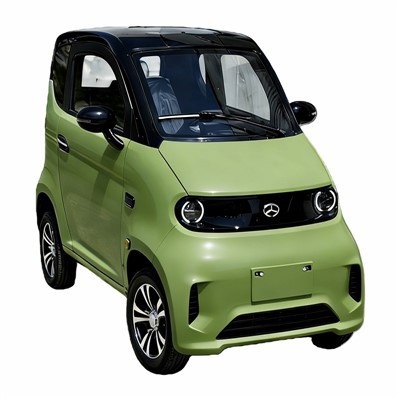
First, let’s cut through the vague stuff: what even is an LSEV lighting system, really? It’s not a watered-down version of a Tesla or a Toyota’s system, even though the tech’s based on similar core parts. Most LSEVs are built for speeds under 25 mph, so their lighting has to work for slower, stop-and-go stuff, not highway cruising. It’s a whole network of lights, sensors, and tiny control units that all talk to each other to keep riders safe and visible, no matter if it’s a 2 a.m. run to a corner store or a rainy school drop-off.
Let’s start with the main event: the forward lights. Your average highway EV has fancy high-beam adjusters and adaptive headlights that turn with the steering, but LSEVs? We keep it practical, but we don’t skip safety. Most of our LSEVs run on LED headlights now, not the old halogen bulbs—LEDs use way less power (super important, since LSEV batteries are way smaller than a Nissan Leaf’s, usually 48V to 72V vs. highway cars’ 400V+), and they throw a clear, wide beam that covers the narrow side streets and parking lots these cars live on. Wait, but do they need high beams? For places with no street lights? Yep, but we set them so they don’t blind pedestrians walking on the sidewalk—since LSEVs are often used in areas with lots of foot traffic, that’s a non-negotiable. A while back, I had a customer tell us their old LSEV’s high beams were so bright, they got a complaint from a retiree walking his dog at night. We fixed that by adding a simple cutoff line, no fancy adaptive stuff, just a small internal baffle in the LED housing that keeps the beam aimed at the road and not into someone’s eyes.
Then there’s the turn signals—super basic, but you’d be surprised how many entry-level LSEVs skip the side markers or make the turn signals too dim. Our team builds integrated turn signals into the headlight housings and the taillights, plus little amber marker lights on the front fenders and the back corners. Why? Because when you’re zipping around a parking lot in a tight spot, other drivers or people on bikes need to see exactly which way you’re turning. We also added a hazard light function that flashes all four turn signals at once—essential if you break down on a side street, which happens more than you think, and you need people to see you. I remember last winter, we got a call from a fleet customer that had an LSEV break down in a snow-covered neighborhood; their hazard lights alerted a plow driver, who stopped to help, instead of the driver waiting half an hour in the cold. Small detail, big impact.
Now the rear lights—this is where visibility is everything. For LSEVs, which are often smaller and darker than regular cars, taillights have to be bright enough to be seen from 500 feet back, even in rain or fog. We use red LEDs for the main taillights, plus brake lights that are a little brighter—wait, no, actually, most of our LSEVs have a dual-intensity taillight: when you’re just driving, it’s dimmer to save power, and when you hit the brakes, it kicks up to full brightness. That’s a simple trick that works way better than separate brake lights, and it cuts down on the number of parts we have to manufacture and install. Also, we add a reverse light, obviously—for backing out of driveways or parking spots. Again, LED, so it doesn’t drain the battery fast, and it’s bright enough to see curbs or kids playing behind the car. I once tested a prototype LSEV with a weak reverse light in a dark parking garage; I almost backed into a scooter, so we upped the reverse light’s brightness by 20% across all our models after that. Lesson learned.
But here’s the part most people don’t talk about: the control system for all these lights. LSEVs don’t have big, complex body control modules (BCMs) like highway cars—we use tiny, affordable electronic control units (ECUs) that run on the same low-voltage power as the rest of the car (most of our LSEVs use 60V, so no high-voltage wiring, which makes repairs way easier). These ECUs don’t just turn lights on and off—they sync the turn signals, the hazard lights, and even work with the car’s throttle and brake pedal: when you hit the brakes, they tell the taillights to flip to full brightness, no extra wiring needed. We also add a little dusk sensor on the dashboard, so if it starts getting dark, the headlights turn on automatically. Why? Because half the time, LSEV riders (think delivery drivers, campus shuttles, or parents driving kids to after-school activities) forget to turn their lights on. That sensor eliminates human error and makes the car way safer.
Wait, what about special use cases? Our LSEVs aren’t all the same—we make some for small business delivery, some for campus shuttles, some for residential golf courses. For delivery LSEVs that are used at night dropping off packages in dark neighborhoods, we add extra underbody lights that cast a soft glow on the ground around the car, so riders don’t trip over curbs or steps when they get out. For campus shuttles that carry 4-5 people, we add front and rear door lights that turn on when the doors open, so passengers can see where they’re stepping at dusk. We even have a special lighting package for farms—our agricultural LSEVs have heavy-duty waterproof lights that can get covered in mud and still work, because mud can make regular LEDs dim or short out. A farm customer told us last year, their old LSEV’s lights died after a rainstorm when mud got into the headlight housing; we redesigned ours with a sealed rubber gasket, and they haven’t had a problem since.
Now, let’s talk about power, because that’s the biggest constraint for LSEV lighting systems. Unlike highway EVs, which can afford to siphon a little power from their big battery packs, LSEVs have tiny batteries—usually 10 kWh to 20 kWh, enough for 40-80 miles of driving. So every light has to be efficient, and every function has to be designed not to drain the battery faster. That’s why we stuck with LEDs—they’re 80% more efficient than halogen bulbs, so they use way less power. We also disable non-essential lights when the car’s parked, except for the hazard lights, so if a rider leaves their lights on overnight, the battery doesn’t die. We had a customer in Florida a few years ago whose kid left the headlights on in their LSEV while they were at a soccer game; when they came back, the car wouldn’t start. We adjusted the ECU to turn off the lights after 10 minutes of the car being in park with the key off, and that’s now a standard feature across all our models. No more dead batteries from forgotten lights.
Also, we’ve had to make sure our lighting systems stand up to the wear and tear LSEVs go through. They’re not driven on perfect highways—they go over potholes, dirt roads, bumpy campus paths, and even through snow. So we test every light housing for vibration: we shake the lights for 100,000 cycles to make sure the LEDs don’t come loose or the wires break. We also test them for water resistance—IP67 rated, which means they can be submerged in 3 feet of water for 30 minutes, perfect for if a car drives through a puddle or gets caught in a heavy rain. Last summer, we had a LSEV drive through a flooded construction zone; the lights still worked, and the driver didn’t have to pull over. That’s the kind of stuff that matters to our customers, not just fancy features.
Wait, should we mention compliance? Yeah, because even LSEVs have to follow basic lighting rules, depending on where they’re sold. In the US, for example, LSEVs have to meet Federal Motor Vehicle Safety Standards (FMVSS) for lights, which means we can’t make lights that are too bright or too dim. In the EU, there are different rules, so we have a separate lighting package for our European customers that meets ECE R48 standards. As a supplier, we don’t cut corners on that—our customers (whether they’re running a fleet of 50 campus shuttles or a small dealership selling 10 LSEVs a month) need to know their cars are legal to drive. I’ve seen other LSEV suppliers skip compliance to save a buck, and they end up with cars that can’t be registered, which is a nightmare for their customers. We never do that.
So, putting it all together: the low-speed electric passenger car lighting system isn’t just a bunch of bulbs hooked up to a battery. It’s a tailored network of efficient, durable, compliant lights and tiny ECUs that work for the specific use cases these cars get put through. It’s designed to save power, keep riders and other people safe, and hold up to the rough conditions LSEVs face every day. It’s not the fancy high-tech adaptive lighting in highway EVs, but it’s tailored exactly to what these small, slow cars need.
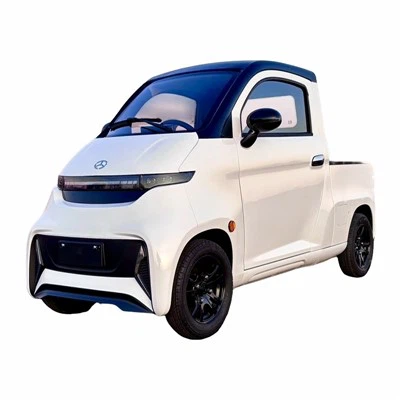
If you’re a fleet manager looking for LSEVs for delivery, campuses, or residential communities, or a dealership wanting reliable, safe LSEVs to sell, we’ve got the lighting systems (and the whole cars) built to fit your needs. No cheap, flimsy parts, no cutting corners on safety, just systems that work when you need them. Hit us up to talk through your specific needs—whether you need extra lights for delivery routes, sealed lights for farm use, or compliance for a specific region, we can customize it. Let’s make sure your LSEVs are as safe and visible as they can be.
4-Wheel Electric Cargo- Pickup References
National Highway Traffic Safety Administration. (2022). Federal Motor Vehicle Safety Standards for Low-Speed Electric Vehicles.
International Electrotechnical Commission. (2021). Lighting Systems for Low-Speed Road Vehicles.
Automotive Electronics Council. (2020). ECUGuidelines for Low-Voltage Vehicle Control Systems.
Taizhou Xiangyuan New Energy Technology Co., Ltd.
As one of the leading low-speed electric passenger car manufacturers and suppliers in China, we warmly welcome you to wholesale cheap low-speed electric passenger car for sale here from our factory. All customized products are with high quality and low price. Contact us for pricelist.
Address: NO.7HUANGJIN ROAD,METAL RESOURCES RECYCLING INDUSTRY BASE, LUQIAO, TAIZHOU, ZHEJIANG
E-mail: order@jiajiev.com
WebSite: https://www.jiajiev.com/
