Hey everyone, let’s cut to the chase—if you’ve ever spent hours adjusting or working on spine-related procedures (or even just spent all day hunched over a desk, let’s be real), you know how brutal repetitive motion or bad positioning can be on your body. That’s exactly why the spine instruments we supply aren’t just “tools”—they’re built with real, on-the-ground ergonomics that make a huge difference for the people using them day in and day out. I’ve been in the medical equipment game long enough to see a lot of products that look good on paper but fall flat when you’re actually holding them for 8+ hours straight, so today I want to break down what makes these instruments different, no fancy jargon, just straight talk. Spine Instruments
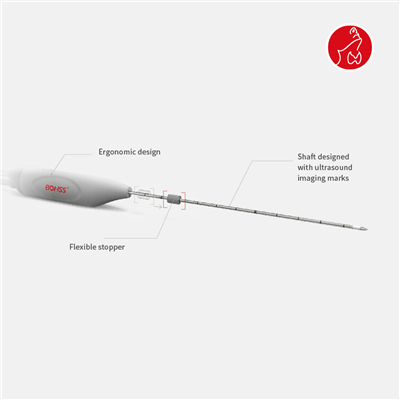
First off, let’s talk about handle design—this is probably the most obvious ergonomic feature, but it’s way more than just “a grip that fits your hand.” A lot of generic surgical instruments have handles that are either too slim, too thick, or have sharp edges that dig into your palm after 20 minutes. Our spine instruments have what we call contoured, non-slip handles, but let’s get specific: the curve matches the natural flex of a surgeon’s or surgical tech’s hand, so when you wrap your fingers around it, there’s no pressure points on your knuckles or the base of your palm. I remember a last year a neurosurgeon client told me he used to wear finger cots just to protect his skin from the sharp, hard handle on his old Cobb elevator (you guys know that one—used to move spinal bone fragments) and he stopped using them entirely once he switched to our version. Also, they’re textured, not glossy—glossy handles slip when your hands get sweaty from gloves or long procedures, and trust me, that’s a risk you don’t want to take. The non-slip rubberized coating is durable, too; it doesn’t peel off after a few sterilization cycles, so it works for busy ORs that run 12-hour days back-to-back.
Next up, weight distribution. This is a big one that most people don’t notice until they’re holding a 6-inch curette for 45 minutes while guiding a rod into place. A lot of big, heavy instruments are front-heavy—so all the weight is at the business end (the part that goes into the patient), which makes your hand and forearm work harder to keep it steady. That leads to that dull ache in your wrist and elbow by the end of the week, even if you’re not lifting super heavy stuff. Our spine instruments are balanced so the weight is evenly split between the handle and the working tip. Let me use a pedicle screw driver as an example—this is one of the most commonly used spine instruments, used to place screws that stabilize the spine. Old models often feel like they’re pulling forward, so you’re constantly tensing your grip to hold it straight. Ours sits perfectly in your palm, so you can apply precise torque without straining your wrist. I even had a physical therapist who works with ortho residents test a set a while back, and she said the difference in grip fatigue after an hour of simulated procedures was night and day—no surprise, since muscle strain over time leads to things like carpal tunnel, which is a huge problem for people in this field.
Then there’s the length and size of working tips, tailored to the most common spine procedures. Let’s face it—one size doesn’t fit all when it comes to spinal anatomy. The cervical spine (neck) is way smaller and tighter than the lumbar (lower back), so an instrument made for lumbar is going to be too bulky to maneuver in the narrow space around the spinal cord. We design our instruments with variable working tip lengths, so you can grab a short, narrow tip for cervical work and a longer, sturdier one for lumbar fusions. Also, the angle of the tip is calibrated to reduce the need for awkward wrist twists. I know so many surgeons who end up twisting their wrists 90 degrees to reach a target in the spine, which is a killer for repetitive motion injuries. Our tips are offset or bent at angles that let you stay in a neutral wrist position—think less “wrist rotation” and more “arm movement,” which is way easier on your joints. One ortho tech told me he used to have to switch hands mid-procedure because his wrist would cramp up, and now he can do full procedures on a patient without switching once—small win, but a game-changer for his workflow.
Wait, let’s not forget about the hinge and joint design, specifically for instruments that open and close—like ronguers, which are used to trim bone or soft tissue in the spine. A lot of ronguers have stiff hinges that require a lot of force to squeeze, and when you’re squeezing that hard every 10 seconds for an hour, your forearm is going to be sore. Our ronguers have low-friction hinges that move smoothly, so you only need a light, consistent squeeze to operate them. Also, the closing mechanism is designed so the pressure is distributed across your fingers, not just your index finger and thumb—no more pinching your thumb raw after a long day. I once spoke to a surgical resident who said his thumb had a permanent indent from his old ronguer’s thumb pad, and that’s gone now after switching to our set. That’s the kind of small detail that adds up to real comfort over time.
Another underrated feature is the visibility of the working end. Wait, is that ergonomic? Hear me out—if you can’t see what you’re doing, you tend to crane your neck or hunch over to get a better look, which is terrible for your posture. A lot of spine instruments have bulky handles that block your view of the tip, especially in tight surgical sites. We make our handles slim enough that they don’t obstruct your line of sight, and some even have a slight notch or cutout at the top of the handle that lets you peer down at the working end without leaning in. I had a minimally invasive spine surgeon tell me that visibility is everything for MIS procedures, where you’re working through a tiny incision—if you have to lean in to see, your back gets sore fast. Our instruments cut down on that hunching, which reduces upper back and neck tension. That’s a big deal because a lot of people think ergonomics is just about hands, but it’s the whole body—you’re standing or leaning over a table for hours, so anything that keeps your posture neutral is a win.
Also, sterilization compatibility, wait, is that ergonomic? Let’s think: if an instrument is hard to clean and sterilize, staff might force it into a sterilization pouch or holder, which can bend the hinges or scratch the surface, leading to a less comfortable grip over time. Our instruments are made with smooth, seamless joints and no small crevices where gunk can build up, so they’re easy to clean, but also, the design holds up to hundreds of autoclave cycles without warping. I’ve seen instruments that bent after 10 uses because they were cheaply made, and a bent hinge is hard to squeeze, which leads to more force, more fatigue. Ours stay straight and balanced, so they feel the same way after a year as they did on day one. That’s part of ergonomics too—consistent performance reduces the need to adjust or compensate for a tool that’s changed shape over time.
Let’s get real here—we don’t sell “fluffy” ergonomics. These are features that solve real pain points for people in the OR, clinics, or any setting where spine instruments are used. I’ve talked to so many clients who’ve switched to our sets from cheaper brands, and their feedback is all the same: less fatigue at the end of the day, fewer aches, more consistent control. I’m not here to brag, but this is what happens when you actually listen to the people using the tools, not just design in a lab without real-world input.
If you’re reading this and dealing with sore hands, a cramping wrist, or that dull ache in your back after a long day of using spine instruments, you know exactly what I’m talking about. The good news is, you don’t have to settle for tools that hurt you to do your job. All of these ergonomic features come together to make a product that’s safe (no slipping, balanced torque means less risk of accidental movement during procedures), comfortable, and built to last.
If you’re a surgeon, surgical tech, clinic manager, or anyone who works with spine instruments and wants to chat about how these features can make your workday easier, feel free to reach out to us. We can send over samples, talk through specific procedures, or answer any questions you have—no pressure, just straight talk from someone who’s been in this space long enough to know what works. Don’t let poorly designed tools be the reason you’re dealing with avoidable strain or fatigue. Let’s work together to get you instruments that work as hard as you do, without wearing you out.
Rhinnology Surgical Power Systems References:
- Occupational Safety and Health Administration (OSHA). Musculoskeletal Disorders and Workplace Factors: A Critical Review of Epidemiologic Evidence for Work-Related Musculoskeletal Disorders of the Neck, Upper Extremity, and Low Back. 2009.
- American Academy of Orthopaedic Surgeons (AAOS). Ergonomic Guidelines for Orthopaedic Surgical Instruments and Procedures. 2021.
- National Institute for Occupational Safety and Health (NIOSH). Work-Related Musculoskeletal Disorders in Healthcare Workers. 2018.
- Spine Surgery Technology Journal. Ergonomic Design Principles for Minimally Invasive Spine Instruments. 2022.
- Journal of Surgical Instruments and Technology. The Impact of Instrument Weight Distribution on Surgeon Fatigue and Procedure Outcomes. 2020.
Jiangsu Bonss Medical Technology Co., Ltd.
As one of the most professional spine instruments manufacturers and suppliers in China, we’re featured by quality products and good price. Please rest assured to buy bulk spine instruments for sale here from our factory. Customized orders are welcome.
Address: Building #7,No.898,China Medical City Avenue, Haling District, Taizhou City.Jiangsu P.R. China
E-mail: inquiry@plasma-surgical.com
WebSite: https://www.bonssmedical.com/
