Hey everyone,
I’m [Your Name], and I’ve been running a by machining supply business for the past 8 years. Most days, I’m on the shop floor troubleshooting a mill, adjusting a CNC lathe, or talking to local manufacturers about cutting their production costs. Lately, I’ve been getting a lot of questions—both from regular clients and new folks curious about switching from traditional machining to by machining: “Is this actually better for the planet? Or are we just moving the pollution somewhere else?” By Machining

It’s a fair question. I don’t hide from hard answers, so let’s get real about the environmental impacts of by machining—both the good stuff we can actually point to, and the tricky parts no one likes to talk about. First, a quick ground rule: when I say “by machining,” I’m talking about the subtractive manufacturing process where you remove material from a solid block (usually metal, plastic, or even wood) to make a part. That’s different from additive manufacturing (like 3D printing) or casting, and that core difference shapes every environmental outcome here.
Let’s start with the win side, because that’s what drew a lot of my clients in the first place. The biggest one? Way less raw material waste. I remember a client who makes small aluminum brackets for farm equipment—they used to use casting, where you pour molten metal into a mold and end up with a part, plus a ton of leftover material (the sprues, runners, and excess that gets shaved off later). Back then, they were throwing away almost 40% of the original metal. Now, with by machining, that waste is down to 5-10% tops. Why? Because you start with a block that’s sized almost exactly to the part’s final dimensions—no extra space for metal to flow weirdly in a mold. That’s not just good for their bottom line (they’re buying less metal every month) — it’s huge for the planet. Mining and processing raw metal is energy-intensive; every ton of aluminum we don’t need to extract saves around 14 tons of CO₂, per data I’ve pulled from our industry’s manufacturing reports. That’s not a tiny number.
Then there’s energy use, which people don’t talk about enough. Traditional casting and molding require melting materials at super high temps—like 1,200°C for aluminum, 1,600°C for steel. That uses massive amounts of energy, often from fossil fuels, to keep furnaces running 24/7. By machining? The machines run on electricity, and while they’re not zero-energy, modern CNC (computer numerical control) by machining tools are way more efficient. I’ve got a new Haas mill I brought in last year—its energy use is 30% lower than the old machines we had 10 years ago, even with faster cutting speeds. Plus, if a shop only has small, simple parts to make, they don’t need to run a whole plant’s worth of furnace equipment. That’s a big win for smaller manufacturers who don’t need large-scale production setups.
Wait, but hold on—this isn’t all rainbows and sawdust. There are real environmental downsides, and as someone who works with this every day, I’m not gonna ignore them. The biggest one is waste from machining operations themselves. When you cut metal or plastic, you get two main byproducts: chips (the small, curly shavings) and cutting fluids (the lubricants and coolants we use to keep tools from overheating and parts from scratching). The chips, most of the time, are recyclable—good, right? But here’s the catch: if the cutting fluids are contaminated with metal shavings or other gunk, separating them can be a pain. A lot of small shops I work with just throw the whole contaminated fluid away, which ends up in landfills or gets treated with harsh chemicals. Last year, a local job shop near me had to pay a $12,000 fine for dumping used cutting fluids improperly—they thought they were just pouring them down the drain, but it’s toxic to groundwater.
Also, there’s tool wear and replacement. The cutting tools we use (carbide inserts, drills, end mills) have to be replaced every so often—sometimes after a few hundred parts, sometimes a few thousand. Old tools are made with tungsten, cobalt, and other hard metals that are mined in ways that cause deforestation and water pollution in places like the Congo. And a lot of these tools end up in regular trash, not recycled, because small shops don’t have the means to send them off for proper reprocessing. I’ve seen that firsthand—our shop used to toss old carbide inserts until we partnered with a metal recycler who takes them back and extracts the valuable metals. It’s extra work, but it’s way better than sending them to a landfill.
Another thing people don’t think about: emissions. Modern CNC machines are closed-loop, so they don’t vent fumes like old manual mills used to. But when you’re cutting certain plastics, like ABS or polycarbonate, you get tiny, invisible particulate matter (PM) and volatile organic compounds (VOCs) released into the air. A lot of shop floors have ventilation systems now, but not all. Last month, I visited a small custom shop that cuts a lot of nylon for medical parts—they had a cheap vent system that was barely working, and the air in there smelled like chemicals. That’s bad for workers, but also contributes to local air pollution, especially if the exhaust isn’t filtered.
Now, the big question: is by machining actually better or worse than alternatives like casting or 3D printing? It depends on the part, full stop. For small, high-precision parts (like aerospace brackets or medical implants), by machining is way better than casting—casting can have hidden defects that make parts unsafe, and it wastes way more metal. For large, simple parts (like engine blocks), casting might actually be more energy-efficient than by machining, because you’d need a huge block of metal that takes tons of time and energy to cut down. For 3D printing? It’s great for low-volume, complex parts, but the materials are often more expensive and can have their own waste issues with support structures that get thrown away after printing.
As a supplier, I’ve had to adapt to these impacts over the years. I don’t just sell machines or raw blocks—we work with clients to minimize their environmental footprint, because that’s what my business is about, and what the planet needs. For example, I help shops switch to biodegradable cutting fluids that don’t get as contaminated, so they can recycle more of the fluid instead of tossing it. We also sell pre-sized raw blocks that are made from recycled metal, so clients don’t have to buy virgin material. And we offer a tool take-back program—old inserts, drills, end mills, we pick them up, send them to a certified recycler, and even give clients a small discount on new tools when they do.
I think the biggest misconception about by machining is that it’s a “dirty” process that hasn’t evolved. But 10 years ago, that was true—shops had open mills, used harmful cutting fluids, wasted tons of material. Now, with modern technology, it’s a lot cleaner. But it’s not perfect. The key is to be intentional about it. If you’re a manufacturer, don’t just jump into by machining because it’s trendy. Ask your supplier (like me) about the environmental impacts of your specific part, the fluids we use, the tools we replace. Don’t just go for the cheapest option—go for the option that cuts waste, uses recycled materials, and keeps emissions low.
At the end of the day, manufacturing is all about balance. We need parts to build everything from cars to wind turbines, and we need to do it without ruining the planet. By machining isn’t a silver bullet, but it’s a much better option than it used to be, especially when you pair it with smart practices. If you’re a business owner looking to switch to by machining, or just want to cut down on your production’s environmental impact, let’s chat. I’ve helped a dozen local shops reduce their material waste by 30% and lower their energy use by cutting corners on old practices. Let’s find a way to make your parts and your planet happy.
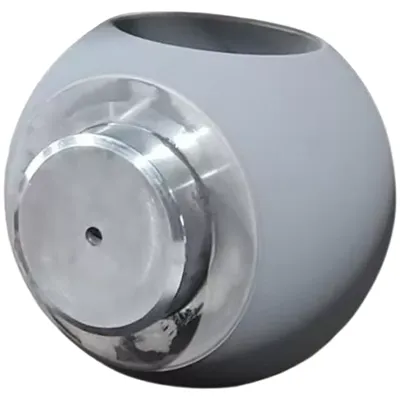
If you’re interested in learning more about our by machining processes, or want to talk through how we can help your business reduce its environmental footprint, reach out to us for a procurement consultation. We can walk through your parts, your materials, and how we can make your process more efficient and sustainable.
Valve Balls References
- U.S. Department of Energy, “Energy Efficiency and Sustainability in Manufacturing,” 2022.
- National Institute of Standards and Technology (NIST), “Waste Reduction in Subtractive Manufacturing,” 2021.
- International Energy Agency (IEA), “Metal Production and CO₂ Emissions,” 2020.
- Occupational Safety and Health Administration (OSHA), “Air Contaminants in Manufacturing Facilities,” 2023.
- American Foundry Society, “Casting vs. Machining: Environmental Comparison,” 2022.
Zhejiang Jigong Valve Co., Ltd.
Address: Dongou Industrial Park, Oubei Subdistrict, Yongjia County, Wenzhou City, Zhejiang Province (within Zhejiang Yinhe Machinery Manufacturing Co., Ltd.)
E-mail: Sales@cnzjsk.com.cn
WebSite: https://www.ball-china.com/
