If you’ve ever installed a diesel generator at a mountain lodge, a remote cell tower in the Rockies, or a water treatment plant 10,000 feet above sea level, you know the quiet panic of watching a unit sputter when it should be running full-bore. Early in my career as a diesel generator supplier, I got a call from a ski resort in Colorado that had just lost power mid-week—their new 200 kW genset, shipped straight from our warehouse at 5,000 feet, couldn’t keep the ice-making machines running at 9,200 feet. We rushed a technician out, and what we found wasn’t a broken part, it was altitude’s quiet, systematic attack on how diesel engines work. That day changed how I talk to every customer buying a generator, especially one that’ll sit more than 3,000 feet above sea level. Let’s break down exactly how high altitude changes a diesel generator’s performance, and what you need to get reliable power. Diesel Generator
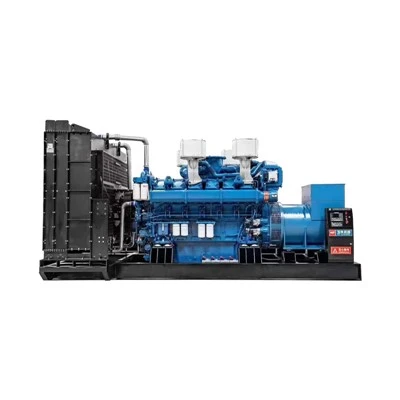
First, let’s ground this in a basic science lesson: atmospheric pressure drops roughly 1 pound per square inch (PSI) for every 2,000 feet of elevation gain. At sea level, average atmospheric pressure is 14.7 PSI; at 8,000 feet, that’s down to ~10.9 PSI—about 25% less oxygen in the air per volume. Diesel engines rely on mixing fuel and air in precise ratios to combust, and they’re nothing if not greedy for oxygen. Naturally aspirated (non-turbocharged) diesel engines pull air into the cylinders purely via the vacuum created when the piston moves down on its intake stroke. At high altitude, that thin air has far fewer oxygen molecules, so the air-fuel mixture becomes fuel-rich—way more fuel than the engine can burn efficiently.
That fuel-rich mix isn’t just inefficient. I’ve seen it clog fuel injectors and build up unburned carbon in the cylinders over time, but the immediate problem is power loss. A 200 kW genset rated for 5,000 feet will only produce roughly 160 kW at 9,000 feet, a 20% drop. For businesses that need that full capacity—say, a data center backup or a factory running on tight margins—that’s a non-starter. Early on, I didn’t know this, so I’d quote a standard 1,800 RPM generator to a customer in Wyoming, and they’d come back frustrated because it couldn’t handle their peak load. That lesson cost me a client worth three years of repeat business, so I now build altitude adjustments into every quote.
Turbocharging changes this dynamic, but not completely, and it’s where a lot of people get confused. Turbochargers use exhaust gas to spin a turbine that crams more air into the cylinders, artificially boosting pressure to compensate for thin outside air. At moderate altitudes (3,000 to 8,000 feet), a properly sized turbocharger will pull most of the power gap back—though it still needs a small power adjustment. The catch? Above 8,000 feet, turbochargers hit a wall. Exhaust gas volume drops too much to spin the turbine fast enough to match the air density at even higher elevations, so power loss still happens, just at a smaller percentage than naturally aspirated engines. A turbo’d genset that loses 10% at 9,000 feet will lose 15% at 12,000 feet, for example, whereas a naturally aspirated unit will lose 30% or more in that same range.
But power loss is only the start of altitude’s impact. There’s heat, which sounds counterintuitive until you dig into it. Thin air transfers heat less efficiently than dense air, right? That means two big problems for diesel engines. First, radiator cooling systems work by pushing air across the radiator to dissipate excess heat. At high altitude, that thin air doesn’t carry heat away as well, so engines run hotter—even if the ambient temperature is cooler. A genset in the Rockies at 70°F (21°C) will run 10 to 15°F hotter than the same unit at sea level in the same 70°F air, because the radiator is less effective.
Second, fuel combustion in thin, less dense air burns at a slower rate, so the engine takes longer to reach operating temperature. That’s not just an inconvenience for start-ups—diesel engines produce the most wear during warm-up, when oil viscosity is higher and combustion isn’t complete. I had a customer in Montana with a genset at 6,500 feet who replaced his engine two years early because of excess start-up wear; he didn’t realize he could adjust the engine’s cold start settings to inject a smaller amount of fuel during warm-up, cutting down on unburned fuel and reducing cylinder wear by 40% in his case.
Then there’s the less obvious stuff: fuel quality and intake system design. Diesel fuel’s density drops at high altitude, which means the same volume of fuel has less energy content. That doesn’t sound like much, but at 10,000 feet, it’s another 2% loss on top of the power drop from air density. To compensate, you need to adjust the fuel injection timing and volume—something we always handle for customers buying units for high elevations, because messing that up leads to rough idling, black smoke, or even engine knock.
Intake systems also need adjustment. Standard air filters are sized for dense sea-level air, so at high altitude, they can restrict air flow unnecessarily. We’ve started using less restrictive high-altitude air filters for our gensets rated above 5,000 feet, which cuts air flow restriction by 15% and prevents that extra drag from sapping more power. I once recommended a high-altitude filter to a customer in Peru who was having trouble with his genset idling rough at 11,500 feet, and he emailed me a week later saying it ran like new—small change, huge impact.
Now, let’s talk about what that means for you if you’re shopping for a high-altitude generator. The first rule is never to assume a standard rating will work at elevation. All gensets have a nameplate rating that’s specific to a reference altitude—usually 0 or 5,000 feet—and going above that means derating the unit to avoid overloading. For example, if your peak load is 150 kW at 9,000 feet, you don’t buy a 150 kW genset rated for sea level—you buy a 200 kW unit with the correct altitude derating applied, so it’s putting out exactly 150 kW at your elevation.
Another thing: seasonal changes matter. A genset that runs fine in the summer at 8,000 feet might struggle in the winter, when air is even denser? Wait, no—wait, cold air is denser, actually. Wait, hold on, let me correct that: cold air is denser, so in the winter, you have more oxygen, which can make combustion run hotter, especially if you’re running at partial load. That’s why we also adjust fuel injection for winter vs. summer at high elevations, to keep engine temperatures steady and prevent overheating. I learned that the hard way a few years ago, when a customer in Idaho had a genset overheat in January; we’d set it for summer air density, and the extra dense cold air was throwing off the air-fuel mix, causing too much heat. We adjusted the injection timing, and that solved the problem.
There are a lot of myths out there about high-altitude generators. Some people swear you need to go with a smaller, lighter unit for elevation, but that’s only true if you don’t account for derating. Others think turbochargers fix all altitude issues, but as I mentioned earlier, above 8,000 feet, even turbo’d units need derating. The biggest myth I hear is that if you only need the generator for backup power (not continuous use), you don’t need to adjust for altitude. That’s a dangerous mistake. Backup power is for emergencies, when you need it to work at 100%—and at high altitude, a unit rated for sea level might only be putting out 70% of its capacity when you need it most. I’ve had three customers over the years come to us after a blackout, saying their backup genset couldn’t keep up because they skipped altitude derating. It’s not worth the risk.
At our company, we don’t just sell generators—we tailor every unit to the exact elevation, load, and use case of our customers. When you reach out, we ask for your site elevation, the peak load you need, whether it’s for continuous or standby use, and even the typical seasonal temperatures. That way, we can specify the right turbocharger size, fuel injection settings, air filter, and cooling system to make sure your genset runs reliably, no matter how high up you are. We also offer on-site testing for customers with really high elevations, so we can tweak settings once the unit is installed, because even the best calculations can have small adjustments once the unit is in its actual environment.
Let me wrap this up with a real example, from a recent job I did for a remote gold mine in Nevada. They were installing a processing plant at 9,800 feet, and they needed four gensets to run 24/7, with a total capacity of 800 kW. A standard sea-level rated unit would have lost 25% power at that elevation, so we went with four 250 kW turbocharged gensets, derated 15% for 9,800 feet, giving them a total of 850 kW of usable power—enough to cover their peak load, plus a 5% buffer for any future equipment upgrades. We also installed high-altitude cooling fans and adjusted fuel injection to handle both the summer heat and the winter cold swings they get at that elevation. Three months after installation, their maintenance team sent us a note saying the gensets are running at 99% efficiency, no issues. That’s the result of getting altitude right.
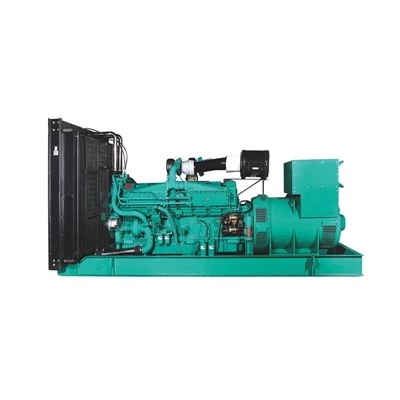
If you’re in the market for a diesel generator and your site is above 3,000 feet, don’t leave performance to chance. Altitude doesn’t have to be a headache, but it does require careful planning. Whether you need a unit for backup power at a small cabin, continuous power for a remote work site, or something in between, we can help you select the right genset, adjusted specifically for your elevation and needs. Get in touch to discuss your requirements, and we’ll walk you through all the details to make sure you get reliable power, no matter how high you are.
Mobile Power Plant References
- Internal Combustion Engine Fundamentals, John B. Heywood, McGraw-Hill Education, 1988
- Diesel Engine Operation and Maintenance Manual, International Organization for Standardization, ISO 3046:2019
- Altitude Effects on Gasoline and Diesel Engine Performance, SAE International, Technical Paper 2018-01-1157
Weifang Bofa Power Equipment Co., Ltd.
We’re well-known as one of the best diesel generator suppliers in China. With a professional production team, we are able to meet the needs of the majority of our customers. Please feel free to buy cheap diesel generator for sale here from our factory. For price consultation, contact us.
Address: Lianhuachi Village, Fangcheng Street Office, Fangzi District, Weifang City, Shandong Province.
E-mail: sales@wfbofapower.com
WebSite: https://www.wfbfgenset.com/
