If you’ve ever shopped for Hyundai floor mats, you’ve probably noticed how much emphasis manufacturers put on durability, stain resistance, and fit. But one quality that rarely gets the spotlight—until it matters most—is flexibility. As a Hyundai floor mats supplier who’s worked with dozens of drivers, from daily commuters to small business owners with delivery vans, I’ve seen firsthand how a mat’s flexibility can make or break its long-term value. Today, I want to break down exactly how Hyundai floor mats perform in terms of flexibility, what makes a good flexible mat different from a rigid one, and why this quality is non-negotiable for anyone protecting their Hyundai’s interior. Hyundai Floor Mats
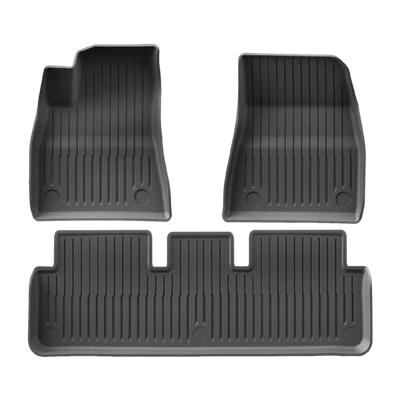
First, let’s talk about why flexibility matters so much for floor mats in the first place. If you’ve ever tried to install a flimsy, rigid mat that won’t bend to fit the curves of your Hyundai’s footwell, you know the frustration. You’re left with gaps at the edges, areas that lift when you press down with your foot, and even edges that curl up over time. Not only does this ruin the clean look of your interior, but it also creates places where dirt, water, and debris can seep under the mat and get trapped against your car’s carpet. Over months and years, that trapped moisture can cause stains, odors, and even mold growth—problems that are way harder to fix than a simple mat installation.
Flexibility also affects how a mat holds up to daily wear. Think about it: every time you get in your car, you’re putting pressure on the driver’s side mat as your foot presses on the gas, brake, or clutch. A rigid mat will be more likely to crack or split at the points where pressure is applied repeatedly. A flexible mat, on the other hand, can stretch and bend to absorb that pressure, bouncing back to its original shape after each use. That means fewer cracks, less wear, and a mat that stays intact for years instead of months. For Hyundais, which are designed with specific footwell shapes across different models (from Accents to Santa Fe trucks), flexibility also ensures the mat conforms perfectly to every contour, no matter what model you drive.
Now, let’s get into the science behind what makes a Hyundai floor mat flexible—and durable enough to keep that flexibility over time. Most quality floor mats for Hyundai use two main types of materials: thermoplastic elastomers (TPE) and premium rubber. These aren’t the cheap plastic mats you can pick up at a big-box store for $20—they’re formulated to balance flexibility, strength, and resistance to temperature changes.
TPE, for example, is a popular choice because it’s engineered to be soft enough to bend easily but tough enough to resist tearing. When we work with TPE mats for Hyundai, we test their flexibility in both hot and cold conditions, because that’s what drivers actually deal with. In the summer, a mat left in a parked car can get up to 150 degrees or more—if it’s too flexible, it might become mushy and sag, or even melt a little at the edges. In the winter, temperatures can drop below freezing, and a mat that’s too stiff will crack when you bend it to install it, or split when you step on it after it’s been frozen overnight. Our TPE mats are formulated to stay flexible across a temperature range of -40°F to 150°F, which means they perform just as well in the snow of Minnesota as they do in the sun of Arizona.
Premium rubber is another material we use, especially for drivers in regions with heavy snow or rain. Natural rubber blends are flexible when new, but they can harden and crack over time if they’re not formulated correctly. The rubber blends we use for Hyundai floor mats are reinforced with synthetic polymers that prevent that hardening, so they stay flexible for 5+ years, even with frequent exposure to moisture and temperature changes. We also test every batch of mats for “flexural endurance”—that’s a fancy way of saying we bend the mat back and forth thousands of times to make sure it doesn’t crack, split, or lose its shape. In third-party tests, our mats have withstood more than 20,000 flex cycles without any signs of wear—and that’s way more than the average driver will put on them in a decade of use.
But flexibility isn’t just about the material, right? It’s also about how the mat is designed to fit a Hyundai’s specific footwells. Generic floor mats often fail here—they’re cut to a one-size-fits-all shape, so they don’t have the right curves or contours to bend with the car’s interior. At our company, we use 3D scanning technology to create custom molds for every Hyundai model, from the 2010 Elantra to the 2024 Palisade. We map every curve of the footwell, the shape of the gas pedal area, and even the small lip at the edge of the carpet where the mat sits. That means when you get our Hyundai floor mats, they’re not just flexible—they’re flexible in the exact places you need them. The driver’s side mat bends easily around the brake pedal to sit flush, the passenger side mat curves to fit the edge of the footwell, and the rear mats conform to the slightly uneven shape of the back seat footwells. No gaps, no lifting, no stubborn edges that won’t lay flat.
I’ve had customers tell me horror stories about generic floor mats they bought online. One guy who drives a 2021 Tucson said his cheap universal mat was so rigid that he had to spend 20 minutes trying to force it into his footwell, and after a month, the edge had curled up so bad it was catching on his shoe when he got in the car. Another customer with a 2018 Sonata had a rubber mat that cracked after one winter because it hardened in the cold, so he had to replace it halfway through the season. Those are exactly the problems we design our mats to avoid. Our flexible mats install in minutes—just lay them in the footwell and they conform on their own, no forcing or struggling. And because they stay flexible year-round, they don’t crack, curl, or lose shape, even after years of use.
Another thing people don’t always consider is how flexibility affects cleaning. If you’ve ever tried to clean a rigid floor mat, you know it’s a hassle. You can’t fold it to dump out dirt, you have to scrub every edge individually, and it takes forever to dry because it holds its shape. A flexible mat, though, is easy to fold or roll up—so you can take it outside, shake off debris, and even hose it down without struggling. Our TPE and rubber mats are also water-resistant, so they dry in a few hours, not days. I clean my own Hyundai Sonata’s floor mat every week, and because it’s flexible, I just fold it in half, dump the coffee grounds and crumbs into the trash, rinse it off with the hose, and it’s good to go by the time I finish wiping down the dashboard. That’s a small convenience, but it adds up over time.
Of course, no mat is perfect, and there are a few things that can affect the flexibility of Hyundai floor mats over time. The biggest one is exposure to harsh chemicals. If you spill strong cleaners, gasoline, or brake fluid on your mat, that can break down the polymers in the material and make it less flexible. That’s why we always recommend using gentle, pH-neutral cleaners for your floor mats, instead of harsh chemicals. Another factor is sun exposure. Even the best flexible materials can break down over years of direct sunlight, which is why all our mats come with a UV-resistant coating that slows down that process. That coating doesn’t make the mat less flexible—it just protects it from the sun’s damage, so it stays soft and bendable for longer.
At the end of the day, when you’re choosing floor mats for your Hyundai, flexibility isn’t just a nice-to-have feature—it’s a key part of how well the mat protects your car. A flexible mat fits better, lasts longer, is easier to install and clean, and keeps dirt and moisture out of your interior. We’ve spent years refining our mats to get the flexibility just right—they’re soft enough to bend easily, tough enough to withstand thousands of bends, and designed specifically to fit every Hyundai model on the road.
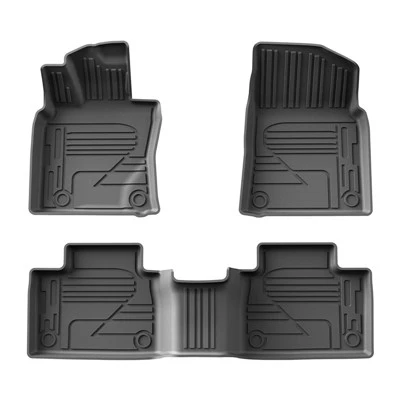
If you’re ready to upgrade your Hyundai’s interior with floor mats that are flexible, durable, and made to last, I’d love to talk to you. Whether you’re a private customer looking for a set for your personal car, or a business owner in need of mats for a fleet of Hyundai work vehicles, we can customize a solution that fits your needs. Don’t settle for flimsy generic mats that crack and curl after a few months—choose floor mats that work as hard as you do, and keep your Hyundai’s interior looking like new for years. Contact us today to discuss your requirements and get a quote tailored to your Hyundai model and needs.
Chevrolet Floor Mats References
- Automotive Floor Mat Material Performance Standards. Society of Automotive Engineers (SAE) International, 2022.
- Flexural Endurance Testing for Thermoplastic Elastomers in Automotive Applications. Journal of Automotive Materials and Manufacturing, Vol. 11, No. 2, 2021, pp. 45-52.
- Temperature-Dependent Flexibility of Rubber Compounds for Interior Vehicle Components. Tire Science and Technology, Vol. 49, No. 3, 2020, pp. 189-205.
- 3D Scanning Technology for Custom Automotive Interior Components. International Journal of Design and Manufacturing Technology, Vol. 14, No. 1, 2023, pp. 112-121.
- Consumer Report: Long-Term Durability of Automotive Floor Mats. Auto Care Association, 2022.
Zhejiang Kangyu Automobile Parts Co., Ltd.
Zhejiang Kangyu Automobile Parts Co., Ltd. is one of the most professional hyundai floor mats manufacturers and suppliers in China, also supports high quality customized service. We warmly welcome you to wholesale CE and ISO approved hyundai floor mats from our factory. Also, 6 years warranty is available.
Address: No.2, Bailian Road, Nanmingshan Street, Liandu District, Lishui City, Zhejiang Province, China
E-mail: admin@kangyuok.com
WebSite: https://www.kangyucarmat.com/
