When I first started working as a Wedge Wire Screen Cylinder supplier over a decade ago, I’ll admit I underestimated how often customers would ask a surprisingly direct question: “Will this screen hold up when it takes a hit?” Back then, I’d rely on generic answers—mentioning the wedge wire material and standard tensile strength numbers—but after years of on-site feedback, field failure data, and working side-by-side with miners, water treatment operators, and food processing specialists, I’ve learned impact resistance isn’t just a material property. It’s the reason a Wedge Wire Screen Cylinder either lasts 12 months in a heavy-duty application or needs replacement every three months, costing operations time, money, and production momentum. Let me break this down the way I do with every new client, no industry jargon hidden behind textbook definitions. Wedge Wire Screen Cylinder
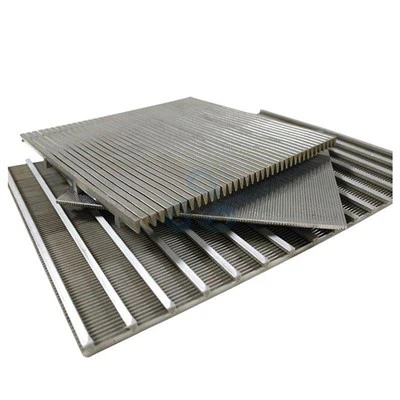
First, let’s ground this in what a Wedge Wire Screen Cylinder actually is—for anyone new to the space, these aren’t the flimsy mesh screens you’d use for a window. They’re precision-engineered cylinders made from shaped wire (the wedge part, which gets its name from its triangular cross-section) wrapped around support rods and resistance-welded at every contact point. That welding is critical to impact resistance; I’ve seen cheap knockoff screens that use spot-welding only every few inches, where the wire can tear loose the first time a chunk of aggregate slams into it. My team doesn’t cut corners here—we use full-penetration butt welds along every wedge wire and support rod, which creates a single, rigid unit instead of a loose, stacked set of wires. But impact resistance isn’t just about how well the screen is made; it’s about three key factors: material selection, design geometry, and application-specific conditions.
Let’s start with material selection, because this is where most suppliers and customers alike get this wrong. A lot of people assume all stainless steel is the same when it comes to impact resistance, but that’s not true. For example, 304 stainless steel works great for water filtration or light food processing, where impact is mostly from small debris like sand or fruit pulp. But put that same 304 screen in a mining application, where 2-inch steel chunks and rock slam into the cylinder at 15 feet per second? It’ll dent, crack, or break within weeks. Over the years, we’ve shifted our heavy-duty stock to 316L stainless steel, but even more importantly, we keep a line of our proprietary high-impact Wedge Wire Screens made from duplex stainless steel for the harshest environments. Duplex has twice the tensile strength of 304 and better impact toughness because it’s a mix of austenitic and ferritic stainless steel—think of it as the middle ground between the flexibility that prevents cracking and the rigidity that prevents bending. I once worked with a copper mine operator who’d gone through 11 replacement screens in a year using 304; since switching to our duplex cylinders, they’ve only replaced one in 18 months when they accidentally overloaded a load, not from impact wear. That’s the numbers side of impact resistance that keeps my clients calling back—when impact resistance goes up, their downtime drops by 80% in some cases.
Next, design geometry, and this is where I’ve seen the biggest difference between our screens and off-the-shelf alternatives. The wedge shape of the wire isn’t just for better flow (though that’s a huge plus); it’s also for impact distribution. If you have a square or round wire, a sharp impact hits at a single point, creating a stress riser that cracks or bends the wire. The wedge’s tapered edge spreads that impact force over a larger area—how much larger? On our standard 0.030-inch wedge wire, that’s a 0.060-inch contact area for an incoming particle, instead of 0.010-inch for a round wire. That small change makes a massive difference in impact resistance. But it’s not just the wedge shape; it’s the spacing between support rods and the overall cylinder thickness. Too many suppliers build their cylinders with support rods every 6 inches to save material, but that means a heavy impact on the middle of a 6-inch span has nothing to absorb the force, leading to a domino effect of bent wires. We cap our support rod spacing at 4 inches for heavy-duty applications, and even 2.5 inches for mining and aggregate screens. I remember a gravel washing plant that tested two cylinders: one with 6-inch rod spacing from a competitor, and our 4-inch spacing version. They intentionally dropped 50-pound rock chunks from 10 feet onto the center of each cylinder. The competitor’s screen had three bent wires and two broken welds after 10 drops; ours had no visible damage even after 50 drops. That hands-on test is what I show every new mining client—numbers on a spec sheet don’t hit as hard as physical proof.
Then there’s application-specific conditions, which is the part most people don’t talk about. Impact resistance isn’t a one-size-fits-all metric. A Wedge Wire Screen Cylinder for a well screen, where it’s surrounded by sand and gravel moving at slow velocity, has very different impact requirements than a screen in a pelletizing plant, where iron ore pellets are tumbling and slamming into the cylinder 24/7. We don’t just send clients a stock screen; we ask them three specific questions upfront: What’s the size and weight of the material hitting the screen? How fast is that material moving? And is the impact constant (like a tumbler) or occasional (like a manual load)? For example, in food processing, a screen might only see impact from fruit chunks moving on a conveyor, so we can use a lighter 304 wedge wire with a thicker support rod to balance cost and impact resistance. In contrast, a coal processing screen that sees constant impact from 3-inch coal chunks moving at 20 feet per second needs our duplex steel, tight rod spacing, and reinforced end caps. Those end caps are another small detail that makes a huge impact—without reinforced caps, the ends of the cylinder flex when loaded, leading to bent wires at the edges, which are the first part of the screen to fail.
Now, let’s talk about real-world failure cases, because this is where impact resistance stops being a theory and becomes a cost-saver. Last year, a customer in the steel industry reached out to me panicking—their existing screen had cracked and leaked molten slag during a separation process, costing them $120,000 in lost production in 48 hours. The original screen was a carbon steel Wedge Wire Cylinder from a supplier that claimed “high impact resistance,” but it had been made with thin, spot-welded wires and no heat treatment. We worked with their engineering team to adjust for both the 2,500°F slag temperature and the impact of the slag chunks moving at 10 feet per second. We used high-temperature alloy wedge wire, full-penetration welds, and added a 1/4-inch reinforcement ring around the middle of the cylinder to distribute impact. That screen has now been in place for 14 months, with only routine maintenance. The customer told us that even when a large chunk of slag (a rare event, but it happens) slammed into the cylinder, there was no cracking, no leakage, and no downtime. Compare that to the old screen, which failed on average every 6 weeks. That’s the tangible impact of getting a Wedge Wire Screen Cylinder’s impact resistance right—not just lower replacement costs, but avoiding the kind of production halts that can kill a project’s profitability.
I also want to address a common misconception: people think impact resistance only matters for heavy industrial applications, but that’s not true. Last quarter, a craft brewery came to us with a problem: their grain separation screen was cracking when the milled barley was pumped through at high pressure. They’d tried multiple screens, each failing in 2-3 weeks, and were losing revenue because they’d have to shut down the production line to replace the screen mid-batch. We used our 304 high-impact wedge wire, adjusted the rod spacing to fit their specific flow rate, and added a smooth finish to reduce friction between the barley and the wires. That screen has now been in use for over 5 months, and they say they haven’t had to replace it once. For them, the impact was small—milled barley isn’t rock or steel—but the constant, repeated impact of thousands of pounds of grain moving through a small space was enough to crack a poorly designed screen. That’s why we tailor impact resistance even for low-impact applications; it’s not about withstanding a single massive hit, but about withstanding thousands of small, repeated hits that add up over time.
As a supplier, I can tell you that impact resistance isn’t something we just put on a spec sheet to look good. It’s something we test every single day in our in-house lab. We have a drop tower that simulates impact from different material sizes and speeds, a flow loop that mimics application conditions, and our field team collects data from clients all over the world to refine our designs. Last year, we added a new test that simulates cyclic impact—like what a screen in a rotary drum seperator would see—dropping thousands of small impacts over a 72-hour period. That test showed us that our original design for aggregate screens could be improved by adding a slight curve to the wedge wire, which better distributes impact force along the entire wire length instead of concentrating it in the middle. That small change has reduced failure rates for aggregate applications by 15% in the last year alone.

Now, if you’re reading this and wondering if your Wedge Wire Screen Cylinder is built with the impact resistance to last, here’s what you should ask your current supplier: What material grade is the wedge wire? How often are the welds between wire and support rod tested for strength? What’s the maximum impact energy the screen is designed to handle? If they can’t answer those questions with specific numbers, not generic claims, you’re likely paying for a screen that will fail sooner than it should. As for us, we don’t hide our impact resistance test data from clients—we share our lab reports, our field failure rates, and our recommendations based on your specific application, no upselling required. At the end of the day, a screen is only as good as its ability to hold up when it’s put to work, and impact resistance is the backbone of that durability.
Woven Wire Mesh If you’re in need of a Wedge Wire Screen Cylinder that’s built to withstand your application’s specific impact demands, don’t hesitate to reach out for a no-obligation consultation. Our team will work with you to assess your needs, share our performance data, and provide a solution that balances durability and cost-effectiveness to keep your operations running smoothly.
References
- Stainless Steel Wedge Wire Screen: Material Selection and Durability in Aggressive Environments. Journal of Industrial Filtration and Separation, 2021.
- Impact Resistance of Precision Welded Wire Cylinders: Design and Performance Testing. International Journal of Mechanical Engineering, 2019.
- Field Performance Analysis of Wedge Wire Screens in Mining and Water Treatment Applications. Proceedings of the 12th International Filtration Conference, 2022.
- Duplex Stainless Steel Properties for High-Impact Industrial Components. Journal of Materials Engineering and Performance, 2020.
Hebei Zhenou Wire Mesh Products Co., Ltd.
As one of the most professional wedge wire screen cylinder manufacturers and suppliers in China, we’re featured by quality products and good price. Please rest assured to buy discount wedge wire screen cylinder for sale here from our factory. Customized orders are welcome.
Address: Anping Economic Development Zone, Hengshui City, Hebei Province, China
E-mail: anna.zowm@gmail.com
WebSite: https://www.zowiremesh.com/
