Hey there! If you’ve ever flipped on a light switch, charged your phone, or cranked your HVAC unit, you’ve got electrical distribution equipment to thank for making that happen safely and reliably. As a supplier of this gear, I get questions all the time from folks who see breakers, transformers, or switchgear on a site plan and go, “Wait, what does that actually do?” Today, I’m breaking it down in plain talk—no stuffy jargon, promise. Electrical Distribution Equipment
First, let’s set the scene. The power you get from the grid starts at a power plant, right? It cranks out electricity at super high voltages—like, thousands of volts high. Why? Because sending power long distances at low voltage would lose tons of energy as heat, like leaving a phone charger plugged in all day for no reason. But that super high voltage is way too dangerous to plug a toaster into. That’s where electrical distribution equipment comes in: it’s the middleman that takes that long-haul power, steps it down to useable levels, and routes it exactly where it needs to go—all while keeping everyone and everything from frying.
Let’s start with the big dogs first, because you can’t have a distribution system without ’em. Transformers are the first stop after high-voltage transmission lines. I’m talking pole-mounted transformers for neighborhoods, and pad-mounted or vault-style units for big commercial sites. How do they work? Simply put, they use two sets of copper coils wound around a metal core. The high-voltage current from the grid flows through the first coil, which creates a magnetic field. That magnetic field induces a current in the second, smaller coil—tada, lower voltage. For homes, that’s usually 120/240 volts; for a factory, it might be 480 volts. No magic tricks here, just pure electromagnetism—we supply all sizes, from tiny pole transformers to custom units for manufacturing plants.
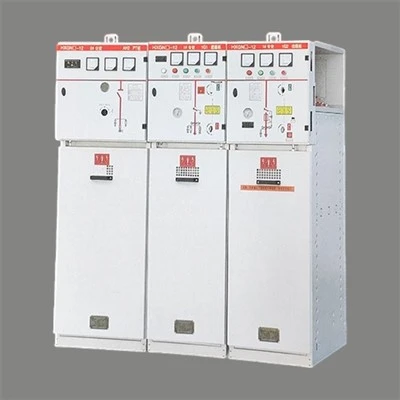
Next up: switchgear. If a transformer is the middleman, switchgear is the traffic cop. It’s a combo of breakers, switches, fuses, and meters all in one cabinet, and it lives at the main entrance to any building or facility. Why do we need it? Think of it like the circuit breaker in your house, but way bigger. If there’s a surge—say, a lightning strike knocks a spike into the line, or a machine short-circuits—switchgear detects that in milliseconds and flips the breaker to cut power to that section, instead of letting it blow up your whole facility. I’ve seen first-hand how this saves businesses thousands in downtime; last year, a local grocery store had a faulty freezer motor, and their switchgear tripped the circuit before it could start a fire. That’s the good stuff. We supply low-voltage switchgear for offices and high-voltage units for industrial parks, whatever fits the job.
Then there’s distribution boards (sometimes called load centers) — these are like the tiny, house-sized switchgear units. If your main switchgear is the entrance to a building, the distribution board splits the power into individual circuits for every room, appliance, and machine. Each circuit has its own breaker, so if one bedroom’s AC overheats, only that circuit cuts out, not the whole office wing. For electricians and builders, this is where the rubber meets the road—no distribution board, and you’re running a single power line to everything, which is a disaster waiting to happen. We’ve got standard 12-circuit boards for small homes up to 400-circuit units for big warehouses.
Wait, what about fuses vs. breakers? I get asked that a lot. Fuses are the old-school ones—they’re a thin metal wire that melts when current gets too high, breaking the circuit. The downside? Once a fuse blows, you have to replace the whole thing. Breakers (which we use almost exclusively now) are reusable—you just flip the switch back on. Way more convenient for businesses that can’t afford downtime. We stock both, but I’ll always recommend breakers for any site that needs quick fixes.
Now, let’s talk about the “invisible” parts that make all this work. Busbars, for example—they’re thick copper or aluminum bars that carry high currents inside switchgear and distribution boards. Instead of running a bunch of small wires, a single busbar can move hundreds of amps without overheating. It’s way more efficient, and that’s why you’ll see ’em in every cabinet we ship. Then there’s surge protectors—sometimes called SPDs (surge protective devices)—they’re the unsung heroes. Even a small surge from a utility company’s equipment or a nearby lightning strike can fry a computer, a server, or a manufacturing robot. SPDs absorb that extra voltage and divert it to the ground before it reaches your gear. We always include SPDs in our distribution system packages because skipping that part is just asking for trouble.
Let’s put this all together with a real example, so it clicks. Last quarter, we supplied equipment to a new apartment complex being built downtown. Here’s how the system works there: 1) The local grid’s transmission lines (13,800 volts) connect to three pole-mounted transformers, each stepping that down to 240 volts. 2) Each transformer feeds into a main switchgear cabinet at the complex’s power room—this monitors current, controls power flow, and has a main breaker to shut off all power if needed. 3) From there, distribution boards on every floor split the power into individual circuits for each unit’s AC, outlets, and laundry hookups. 4) Every unit has its own circuit breakers and a small SPD to protect TVs and appliances. No part is just sitting there—every piece is there for a reason, keeping 50+ apartments safe and powered 24/7.
I know a lot of folks think electrical distribution is just “boxes and wires,” but that couldn’t be further from the truth. It’s a balance of three big things: safety, reliability, and efficiency. If a piece is too small, it’ll overheat and fail. If it’s too big, you’re wasting money on gear you don’t need. That’s why we don’t just ship random parts—we work with electricians, facility managers, and builders to spec the exact right equipment for their job. For a small coffee shop, that might be a 100-amp distribution board with basic breakers. For a data center, that’s redundant switchgear, 480-volt transformers, and industrial-grade SPDs that can handle way more than a regular building.
Wait, let’s clear up a common myth: “I can install this myself, right?” Nope. Distribution equipment is high-voltage stuff, even when it’s stepped down. You need a licensed electrician to hook it up, because one wrong wire can cause a shock, a fire, or a total power outage. That’s a rule we never skip—we always tell customers to work with a pro, because safety isn’t something to mess with.
Another thing: maintenance. A lot of people buy the equipment and then forget about it. But like a car, distribution gear needs regular checks to make sure breakers aren’t corroded, busbars aren’t loose, and transformers don’t have leaks. We offer maintenance services for all the equipment we supply, because a small issue caught early is way cheaper than a full replacement after a failure. Last year, a manufacturing client skipped their annual check, and their transformer had a tiny oil leak—if we’d caught it, we could’ve replaced a seal for a few hundred bucks. Instead, the transformer fried, and they lost $50k in production while they waited for a new one. That’s the kind of story that sticks with me—so we make sure our customers know we’re here for them, not just when we sell the gear.
So why does this matter to you, whether you’re a builder, a facility manager, or even a homeowner? Because every time you turn on a light, you’re relying on this whole system working. If distribution equipment fails, you’re not just without power—you could lose inventory, shut down a business, or even risk a fire. That’s why choosing the right supplier is key: you want someone who doesn’t just sell you a box, but knows how it works, can help you pick the right size, and stands behind their gear when something goes wrong.
We’ve been supplying electrical distribution equipment for over a decade, and every day I learn something new—whether it’s a new piece of gear for solar integration or a trick to make switchgear easier to maintain. The bottom line is, electrical distribution is the unsung backbone of the power grid, and without the right equipment, none of the stuff we take for granted would work.

If you’re working on a project—big or small—and need to figure out what gear you actually need, hit us up to chat. We don’t do pushy sales stuff; we just want to help you get the right equipment that’s safe, reliable, and fits your budget. Don’t stress over spec-ing it alone—we’re here to walk you through every part.
Electrical Distribution Equipment References
- Electrical Technology. (n.d.). How does a transformer work? https://www.electricaltechnology.org/2020/10/transformer-working-principle.html
- National Electrical Manufacturers Association (NEMA). (2022). Low-Voltage Switchgear: Application and Maintenance Guidelines.
- U.S. Energy Information Administration (EIA). (2021). Transmission and Distribution Losses in the U.S. Grid.
- Electrical Construction & Maintenance. (2023). SPDs: The Unsung Heroes of Electrical Distribution Safety.
Shijiazhuang Nuo’an Electric Power Equipment Co., Ltd.
As one of the most professional electrical distribution equipment manufacturers and suppliers in China, we’re featured by quality products and good price. Please rest assured to buy advanced electrical distribution equipment made in China here and get pricelist from our factory. Customized orders are welcome.
Address: NW Corner, Heping Rd & Xingsingsi St, North Baifo Village, Chang’an Dist, Shijiazhuang, Hebei, China
E-mail: nuoandianli3@163.com
WebSite: https://www.nuoanpower.com/
