If you’ve ever worked on an electronics project—whether it’s a small IoT sensor for your garage, a medical device prototype, or a mass-produced consumer gadget—you know that turning a schematic and a handful of PCB files into a working product is rarely a solo job. Most of the time, you’ll need a partner to handle the assembly work, and that’s where turnkey PCB assembly providers come in. As someone who’s spent 12 years in this exact role, walking engineers, product managers, and startup founders through every step of the communication process, I can tell you: clear, intentional dialogue isn’t just nice to have—it’s the difference between a project that ships on time and on budget, and one that hits costly roadblocks. Turnkey PCB Assembly
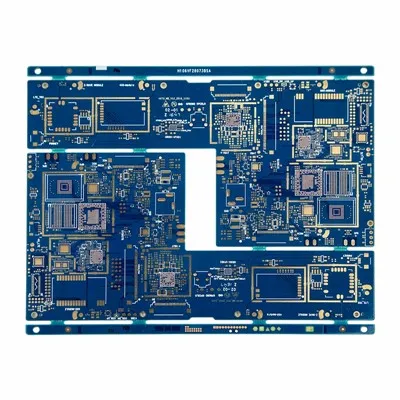
Let me take you through the real, step-by-step communication process we walk through with every client, no matter how big or small their project is. This isn’t some generic corporate checklist—these are the conversations we actually have, the questions we ask, and the small details that end up saving everyone weeks of headaches later.
The first touch is almost always a call or an email from someone who’s just stumbled into a dead end. Maybe they spent hours soldering their first batch of boards and half of them don’t work. Maybe they designed a prototype in their garage, ran out of space to assemble it, and need to get a production run done for their first customer order. Whatever the case, the first message isn’t “give me a quote”—it’s “I need help with a PCB assembly job.” Our team doesn’t jump straight to pricing here. We start by listening, because so many of these clients skip over the most critical details when they reach out.
For example, last month I got an email from a startup founder working on a portable air quality monitor. He attached his PCB files and wrote, “Need 100 boards assembled, quote please.” When we hopped on a quick call, he mentioned he’d designed the board to fit inside a custom 3D-printed case, but he’d accidentally made the USB port pads 0.2mm too small. That’s a detail he didn’t put in his email, and if we’d sent a quote based on his initial message, we would have quoted for a standard USB port—costing him a full rework of his board files and delaying his launch by a month. That’s why our first communication step is all about uncovering the project’s “why” and its constraints, not just the “what.” We ask: What’s the intended use for this product? What’s your timeline (is this a prototype or a production run)? Do you have a BOM (bill of materials) already, or do you need help sourcing components? Are there any size, weight, or regulatory requirements we need to account for?
Once we have those basics down, the next step is getting all the design files and supporting documentation in order. This is where communication can get messy if we’re not clear about what we need. We don’t just need the Gerber files (the blueprint for the PCB itself)—we also need the schematic, the BOM with component reference designators, and any design for manufacturing (DFM) notes the client has. Last quarter, a client sent us Gerber files but forgot to include the BOM. We emailed back asking for it, and they replied two days later saying they’d already sourced the components themselves and would drop them off at our facility. That would have been fine… except half the resistors they’d ordered were 0805 size, but their board pads were designed for 0605 components. Instead of a smooth process, we had to coordinate with them to exchange the parts, pushing back their order by a week. These small miscommunications add up fast, so our team is intentional about spelling out exactly what files we need, in what format, and when we need them.
After we have all the files, we do a DFM review—and this is where the communication gets really specific. A lot of clients think DFM is just checking if the board fits in a case, but it’s a deep dive into every detail of the design to make sure it can be assembled reliably, without defects, and on time. We’ll call out things like too-small solder pads that are prone to bridging, components placed too close together to fit the pick-and-place machine, or a BOM that uses obsolete components that are hard to source. We don’t just send a list of issues—we explain why they matter and offer solutions that balance their needs with manufacturability.
Take the air quality monitor founder I mentioned earlier, again. During our DFM review, we noticed two things: first, his design used a fine-pitch microcontroller with 0.4mm pin spacing, which is manageable, but it required a stencil with very tight tolerances that would add a small cost. Second, he’d listed a specific industrial-grade sensor in his BOM, but that sensor had a 12-week lead time, which would make his entire order late. On our call, we walked him through that: we could use an equivalent commercial-grade sensor that had the exact same performance, cut the lead time down to two weeks, and the total cost difference was less than 5% of his overall budget. He was thrilled—he’d been planning to wait three months for the sensor and almost didn’t mention it in his initial outreach. That’s the power of this step: it’s not about pointing out flaws, it’s about collaborating to fix problems before they cost time or money.
Once the DFM review is done and the client approves the adjustments, we move on to quoting the project. This is where transparency is non-negotiable. We don’t send a vague “$X per board” number and hide extra fees. We break the quote down line by line: PCB assembly labor, pick-and-place machine time, stencil cost (if needed), component sourcing fees, testing (like in-circuit testing or functional testing), any lead times required for custom parts, and shipping. We also spell out the terms: when the 50% deposit is due, when we’ll start production, when we’ll notify them of any delays, and when they can expect the finished boards.
A common mistake we see here is clients who focus only on the upfront cost and skip over the fine print. Last year, a startup came to us with a quote from another turnkey provider that was $0.10 per board cheaper than ours. When we asked to see their breakdown, the quote didn’t include functional testing—meaning the client would receive boards that might have a bad solder joint or misaligned component, and have to test them themselves, adding 20 hours of labor at their end. Our quote included full testing, so the “cheaper” quote ended up being more expensive when factoring in their internal costs. We make sure to explain that in our quote, because we want clients to make an informed choice, not just pick the lowest number.
After the quote is approved, the next phase is planning and pre-production communication. This is where we lock in all the final details: what date we’ll start sourcing components, when we’ll schedule the first production run, what testing protocols we’ll follow, and how we’ll share updates. For prototype orders, we often do a small pilot run first—maybe 5 or 10 boards—to make sure everything works before scaling up. We send photos and videos of the pilot boards mid-assembly, so the client can confirm everything is going as planned, and if they have a last-minute change (like adjusting a component value), we can make it before full production.
This is also the point where we align on communication frequency. Some clients want daily updates, especially if they’re working on a tight launch for a trade show. Others prefer a weekly check-in so they don’t get spammed with messages. We never assume what a client needs—we ask them up front how often they want updates, and what type of updates matter most. For example, a medical device client we work with needs sign-off at every stage for regulatory reasons, so we schedule formal check-ins with their engineering team to share documentation, while a hobbyist working on a custom drone just wants to get their boards and move on.
Once production is underway, we provide regular updates as promised. This isn’t just sending a generic “your order is in production” email—we share photos of the pick-and-place machines loading their boards, close-ups of soldered joints, and test results once the boards are assembled. If we hit a snag—like a component is backordered, or a test shows a small defect that’s easy to fix—we contact the client immediately, within a business day, to walk through the issue and present solutions, not just ask for approval. Hidden problems that go unaddressed because of poor communication are the biggest source of delays in PCB assembly, so we prioritize being proactive, not reactive.
Finally, when the boards are finished and pass all our tests, we coordinate shipping and finalize any last-minute details. We send a packing list, a full set of test reports, and a copy of the assembly log so the client can see exactly how each board was made. But even after the order is delivered, the communication doesn’t have to end. We’re here for questions about troubleshooting, for future production runs, or for help with new design projects.

At the end of the day, the communication process with a turnkey PCB assembly provider isn’t about filling out forms or sending files back and forth. It’s about building a partnership where both sides are on the same page, working toward the same goal: getting a high-quality product to market on time. If you’re working on an electronics project and ready to start the conversation, don’t hesitate to reach out to discuss your needs and learn how we can support your project.
Prototype PCB Assembly References
- Stephen H. Hall, Garrett W. Hall, and James A. McCall. High-Speed Digital Design: A Handbook of Black Magic. Prentice Hall, 2015.
- John H. Lau. SMT Assembly: Materials, Processes, and Reliability. McGraw-Hill, 2003.
- IPC-A-610: Acceptability of Electronic Assemblies. Association Connecting Electronics Industries, 2021.
Huaswin Electronics Technology Co., Ltd.
Address: Building A2, Hao Hai Hong Industrial Park, No.3 Yu He Road, Gong He, Sha Jing, Bao An, Shenzhen
E-mail: sales@huaswin.com
WebSite: https://www.huaswin-pcba.com/
