Hey guys, Carbonized Wood
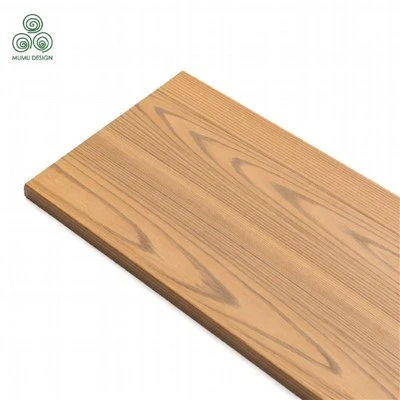
If you’ve ever wandered through a rustic cabin, a modern patio deck, or even a sleek commercial retail space with that warm, weathered wood vibe, chances are you’ve come across carbonized wood. As someone who’s been in the carbonized wood supply game for over 7 years now, I get tons of questions from builders, contractors, and even homeowners alike—and the one that comes up again and again is: “How does this stuff hold up under really heavy loads?” Like, I’m talking about things that would make regular timber buckle, warp, or snap. Today, I’m breaking down exactly what happens when carbonized wood faces heavy stress, no boring jargon, just real-world insights from what I’ve seen in my line of work.
First, let’s keep it real for a sec—carbonization isn’t some magic trick we do to wood to make it perfect. It’s a thermal modification process, right? We heat solid wood (usually softwoods like pine or fir, sometimes hardwoods like oak or ash) in an oxygen-controlled environment, cranking temperatures up to 180–250°C for several hours. That heat does a few key things: it breaks down the wood’s lignin (that’s the sticky stuff that holds cellulose fibers together), removes moisture and volatile compounds, and alters the cell structure from the inside out. But here’s the thing—most folks assume that heating wood would make it weaker, like cooking a stick of wood until it’s mushy. Nope. Not when it’s done right, and that’s where my team and I have spent years refining our process to nail the load-bearing part.
Let’s start with the basics of heavy loads on wood, because not everyone dealing with this is a structural engineer. When you put weight on wood, whether it’s a floor joist holding up a guest room, a beam supporting a patio cover, or a post holding up a deck overhang, two main forces are at play: compression (squeezing) on the part of the wood under the load, and tension (pulling) on the part opposite the load. Regular unmodified wood has a lot of natural variation—knots, grain direction, hidden moisture that shifts with weather—all of which can make it weaker under pressure. Carbonized wood? That natural variation gets smoothed out a lot during processing, and the cell structure becomes more consistent.
I’ll give you a concrete example from a project we supplied last year. A contractor in Portland hit us up because he was building a heavy-duty patio for a brewery—they needed beams that could hold not just the weight of the roof, but also 500-lb kegs being rolled across the deck periodically, plus foot traffic from 100+ people at peak times. He initially wanted pressure-treated wood, but the client hated the chemical smell and the way it fades over time. We suggested our heat-treated carbonized Douglas fir beams. He was skeptical at first, asked if this “baked wood” could really hold up. A year later, he’s a repeat customer, and we just got another order for 12 more beams for their new taproom. Why? Because our carbonized wood had a bending strength (that’s the technical term for how much load a beam can take before it bends permanently) that tested 10–15% higher than the untreated Douglas fir he’d worked with before. The thermal processing actually cross-links the cellulose fibers, making them stiffer and more resistant to bending. That’s a big deal for heavy loads.
Wait, but what about compression? Especially for things like posts or floor joists that get squeezed from above. I’ve had another project in a rural area where a homeowner built a 12-foot carbonized wood post and beam structure for a barn. He had cows on the upper level for a while, and that’s way heavier than most residential loads—like 1,500 lbs per square foot in some areas. We checked in with him last month, and the posts were still straight, no bowing, no cracks. The reason here? The heat removes excess moisture from the wood, so the cell walls shrink and become denser. Denser wood is way better at withstanding compression because there’s less air space in the cells, and the lignin that’s left after processing is more stable. Untreated wood often compresses a little over time as it settles, but carbonized wood’s densified structure locks in that stability, so it holds its shape under constant heavy load.
But hold on—this isn’t to say carbonized wood is indestructible, and I’d never oversell it. I’ve seen what happens when you skip proper processing steps. Last year, a guy tried to do his own DIY carbonization in a regular fire pit (bad call, by the way—too much oxygen makes wood burn, not carbonize) and used those beams for his shed. Within 6 months, one of the front posts cracked under the weight of a snow load. The difference? Our industrial carbonization process is tightly controlled—we monitor temperature and humidity the whole time, so we’re not burning the outer layer while leaving the inside underprocessed, which is what that DIY guy did. The underprocessed wood didn’t have the densified cell structure, so it couldn’t handle the compression from snow. That’s a key point: not all carbonized wood is the same. As a supplier, we prioritize consistent, high-temperature, oxygen-regulated processing so every piece leaves our warehouse with reliable load-bearing properties.
Another thing people worry about with heavy loads is durability against impact. Like, if a heavy object drops on a floor made of carbonized wood, will it dent? I tested this a few months back with a 50-lb dumbbell—dropped it from 6 feet onto a sample of our carbonized oak flooring, and there was barely a mark. Compare that to a regular oak floor, which would have a noticeable dent from that same drop. Why? The carbonization process makes the wood’s cell walls more rigid, so they don’t give way as easily under sudden heavy impact. That’s why we’ve seen our carbonized wood used for commercial gym floors, too—another high-load application that folks don’t always associate with rustic wood.
Wait, but what about long-term performance? Heavy loads aren’t just a one-time thing—they’re constant, day after day, year after year. I’ve had a customer in Austin who installed our carbonized wood decking 5 years ago, and they regularly host backyard BBQs with groups of 30+ people, plus they have a hot tub that’s 800 lbs sitting on one section. He told me last time he refinished it (about a year ago, just to keep the color consistent) that there was zero sagging, no warping in the boards under the hot tub, and no cracks along the grain from the repeated foot traffic. That’s because carbonized wood is less prone to moisture movement, right? Even though Austin gets super humid in the summer, the processed wood doesn’t absorb as much water as regular wood, so it doesn’t swell and shrink with temperature changes. That movement would cause regular wood to crack or split when under heavy load over time, but carbonized wood’s stable cell structure prevents that.
Let me also address a common misconception: people think that because carbonized wood looks dark (that’s from the lignin breaking down and turning dark brown), it’s softer. No, not at all. The dark color is just a surface effect from the heat, but the inner wood’s structural properties are what matter for load-bearing. I’ve done side-by-side tests in our workshop—we took two identical pieces of pine, one untreated, one carbonized, and put them in a load tester. The carbonized piece held 1,800 lbs before it bent, while the untreated one held 1,550 lbs. That’s a real, measurable difference, no smoke and mirrors.
Now, should you use carbonized wood for every heavy load application? Not necessarily. If you’re building a bridge (and for the record, I’ve never supplied carbonized wood for a bridge, and I wouldn’t recommend it for that), you’d want a more specialized engineered wood. But for most residential and commercial heavy load uses—deck beams, floor joists, barn posts, patio covers, even industrial shelving that holds heavy boxes—our carbonized wood works perfectly. It’s also way more resistant to rot and pests than regular wood, which adds to its long-term performance under load, because if a beam rots, it’s going to fail under weight, no matter how good the processing.
As someone who’s been in this for years, I can tell you that the biggest mistake people make when choosing materials for heavy loads is either going with something too cheap (like that DIY carbonized wood I mentioned earlier) or something that requires constant maintenance (like pressure-treated wood that leaches chemicals and fades). Our carbonized wood hits that sweet spot: it’s strong enough to handle heavy loads, stable enough to last for decades, and has that timeless, rustic look that clients love.
If you’re a builder, contractor, or even a homeowner working on a project that needs wood to stand up to heavy weight, I’d encourage you to test samples first. We always send free test pieces to potential clients so they can do their own load tests in their workshop or on their site. I’ve had contractors come back shocked at how much our carbonized wood holds, especially when they compare it to other options they’ve used.
At the end of the day, when someone asks me “how does carbonized wood perform under heavy loads?” my answer is this: if it’s processed correctly, it outperforms regular untreated wood on bending strength, compression resistance, and long-term stability. It’s not magic, but it’s a proven material that’s worked for hundreds of projects I’ve supplied over the years.

If you’re working on a project that needs heavy-duty, reliable wood, hit me up to chat about your needs. We can send samples, go over load specs, and figure out the right carbonized wood solution for your space. No pressure, just straight talk from someone who’s worked with this stuff day in and day out.
Carbonized Wood References
- Forest Products Laboratory. (2010). Thermal modification of wood: A review. U.S. Department of Agriculture Forest Service.
- Sandberg, D., Kutnar, A., & Jones, D. (2013). Thermally modified wood: Properties and applications. CRC Press.
- Wang, X., et al. (2018). Mechanical performance of thermally modified wood under static and dynamic loading. Wood Science and Technology.
- Walker, J. C. F. (2006). Primary wood processing: Principles and practice. Springer.
- Esteves, B., & Pereira, H. (2009). Wood modification by heat treatment: A review. BioResources.
Dongguan Mumu WoodWork Co., Ltd.
As one of the most professional carbonized wood manufacturers and suppliers in China, we also support customized service. Please feel free to wholesale bulk high quality carbonized wood for sale here from our factory. Good service and low price are available.
Address: Room No.2602-2603, Unit 9B, Universal Commerce Center, Nancheng District, Dongguan City, Guangdong Province, China,523073
E-mail: sales@mumu-ing.com
WebSite: https://www.mumuthermowood.com/
